Sleep is a fundamental pillar of health, affecting cognitive function, physical well-being, and overall quality of life. However, sleep requirements change with age due to developmental, hormonal, and lifestyle factors. A Sleep Calculator by Age helps individuals determine their optimal sleep and wake-up times based on scientifically recommended sleep durations.
Why Does Sleep Duration Vary by Age?
Sleep needs change over time due to biological, mental, and environmental factors. Here’s why:
- Development & Growth: Infants and kids require more sleep to support brain and body development.
- Cognitive Performance: Sleep improves memory, focus, and emotional regulation—especially crucial for students and teens.
- Metabolism & Hormones: Quality sleep supports immune function, appetite control, and hormone balance.
- Circadian Rhythm Shifts: Natural body clocks evolve with age, affecting sleep onset and duration.
Recommended Sleep Duration By Age Group
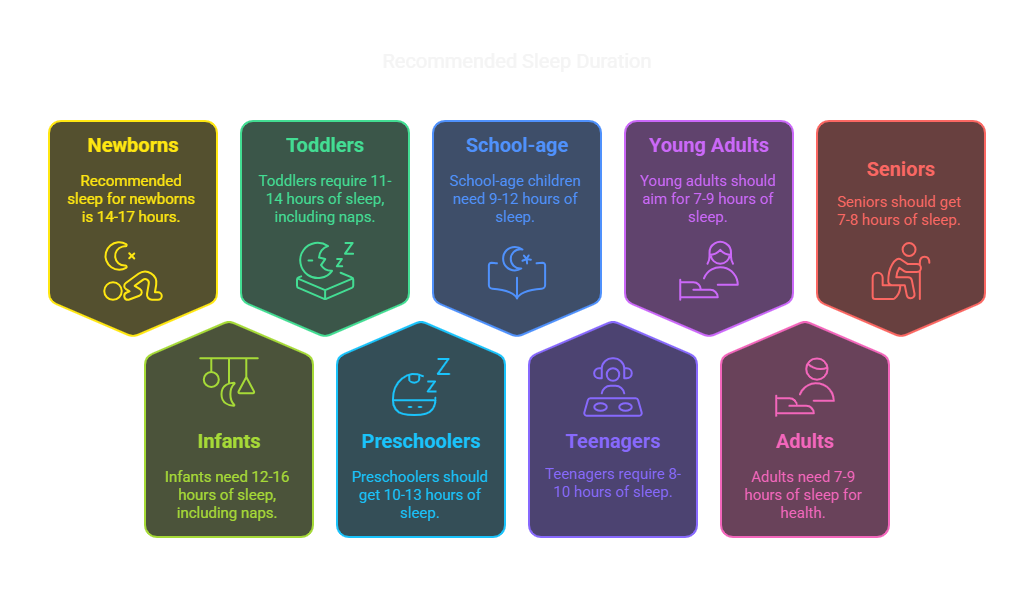
As we age, the sleep patterns shift due to physiological and lifestyle factors. Below is a breakdown of recommended sleep durations by age group:
| Age Group |
Recommended Sleep Duration |
| Newborns (0-3 months) |
14-17 hours |
| Infants (4-12 months) |
12-16 hours (including naps) |
| Toddlers (1-3 years) |
11-14 hours (including naps) |
| Preschoolers (3-5 years) |
10-13 hours |
| School-age Children (6-12 years) |
9-12 hours |
| Teenagers (13-18 years) |
8-10 hours |
| Young Adults (18-25 years) |
7-9 hours |
| Adults (26-64 years) |
7-9 hours |
| Seniors (65+ years) |
7-8 hours |
Now you can easily Calculate seniors, adults, and kids sleep.
How Does the Sleep Calculator by Age Work?
The tool uses the 90-minute sleep cycle method to recommend sleep/wake times. It helps you wake up at the end of a sleep cycle, avoiding grogginess and improving alertness.
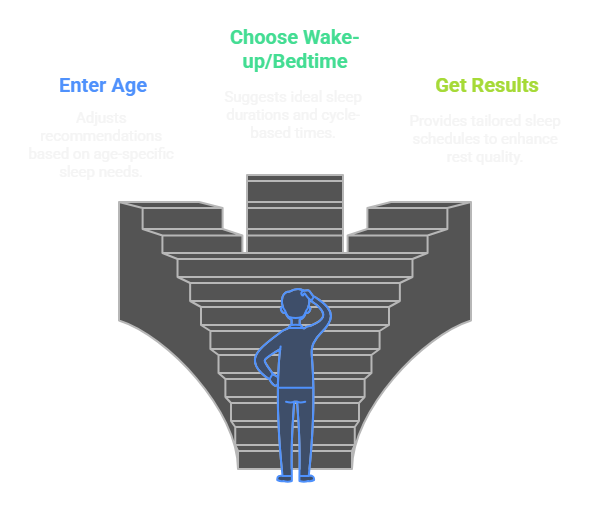
Steps to Use the Calculator:
- Enter Your Age: Adjusts recommended duration based on your biological needs.
- Choose a Time: Either your desired bedtime or wake-up time.
- Get Instant Results: Based on 90-min sleep cycles + 15 min sleep latency.
Example Sleep Calculation
- Wake-up time: 7:00 AM
- Recommended bedtimes: 9:00 PM, 10:30 PM, 12:00 AM, or 1:30 AM
Stages Of Sleep (REM and Non-REM)
| Sleep Stage |
Description |
| Stage 1 (NREM) |
Light sleep, transition phase |
| Stage 2 (NREM) |
Heart rate slows, body temperature drops |
| Stage 3 (NREM) |
Deep sleep, physical restoration |
| REM Sleep |
Dreaming occurs, memory consolidation |
Factors That Impact Sleep Quality
- Caffeine or Alcohol: Especially before bedtime
- Stress Levels: Anxiety and overthinking delay sleep
- Medical Conditions: Sleep apnea, insomnia, or chronic pain
- Lifestyle: Irregular schedules, screen time, or poor environment
Age-Specific Sleep Tips
Kids & Teens
- Stick to a bedtime routine
- Reduce screen exposure 1 hour before bed
- Encourage relaxation (reading, calming music)
Adults
- Avoid caffeine within 6 hours of bed
- Use blackout curtains and avoid screens
- Try mindfulness or deep breathing
Seniors
- Keep a consistent routine
- Stay active during the day
- Limit naps to improve night sleep
Frequently Asked Questions (FAQs)
How does the sleep calculator determine the best bedtime?
The sleep calculator considers age-specific sleep recommendations and 90-minute sleep cycles to ensure an optimal wake-up time
What happens if I don’t get enough sleep?
Lack of sleep can lead to fatigue, reduced cognitive function, weakened immunity, and increased health risks such as obesity and heart disease.
Can I make up for lost sleep?
While short naps can help, chronic sleep deprivation cannot be fully reversed by sleeping longer on weekend.